


Bitcoin Recovery Takes Shape — ETFs Turn Positive, Saylor Buys Again, and Wall Street Goes All-In | Weekly Crypto News
After the violence of January and February, March 2026 finally delivered what the market desperately needed: stability, institutional conviction, and a genuine recovery attempt.Bitcoin (BTC) climbed from its early-month lows near $65,000 to a mid-month peak above $74,000. Spot Bitcoin ETFs turned positive for the first
CryptoUnity
Editorial
Published 6 mo. ago
7 minute read
After the violence of January and February, March 2026 finally delivered what the market desperately needed: stability, institutional conviction, and a genuine recovery attempt.
Bitcoin (BTC) climbed from its early-month lows near $65,000 to a mid-month peak above $74,000. Spot Bitcoin ETFs turned positive for the first time in 2026 with $1.32 billion in monthly inflows. Strategy added another $1.28 billion in BTC. And in a major Wall Street moment, Morgan Stanley tapped Coinbase and BNY as custody partners for its upcoming Bitcoin ETF.
The bull case quietly started rebuilding. Here's what happened 👇
Bitcoin ETFs Log First Monthly Inflows of 2026 — $1.32 Billion Returns
After five consecutive weeks of outflows totaling nearly $4 billion, U.S. spot Bitcoin ETFs finally turned the corner in March. SoSoValue data showed $787 million in net inflows in the first week of March alone — ending the longest outflow streak since the ETFs launched in 2024.
The recovery accelerated mid-month. Between March 9 and March 17, spot Bitcoin ETFs logged seven consecutive days of inflows totaling roughly $1.2 billion — the longest streak since October 2025. BlackRock's IBIT led the charge with single-day inflows of $307–322 million.
By the end of the month, the total was $1.32 billion — the first monthly inflow of 2026. It wasn't enough to fully offset January's $1.61 billion outflow, but it was a clear signal: institutional investors were buying the dip again.
Altcoin ETFs joined in. Solana funds led year-to-date with $223 million in net inflows, having not recorded a single outflow month since launching in October 2025. Ether ETFs saw $138 million in inflows on their best March day, while XRP posted its first daily gains in weeks.
Beginner takeaway: 📈 The first positive month after a streak of outflows often marks a real turning point. ETFs make institutional flows transparent — so watching them is like watching the scoreboard of the smart money.
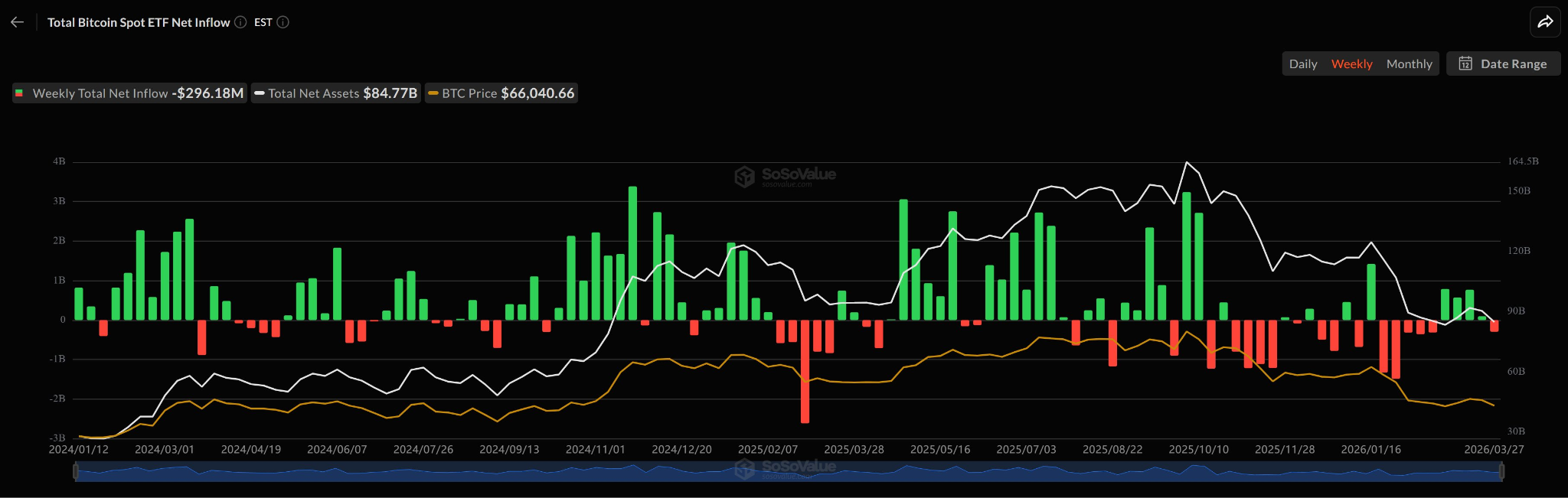
Caption: Spot Bitcoin ETFs logged their first monthly inflows of 2026 with $1.32 billion in March. Source: Cointelegraph / SoSoValue
Michael Saylor Buys Another $1.28 Billion in BTC — The Accumulation Thesis
While some investors were still cautious, Michael Saylor's Strategy didn't hesitate. Between March 2 and March 8, the company acquired 17,994 additional Bitcoin for $1.28 billion. That brought Strategy's total holdings to 738,731 BTC — representing approximately 3.7% of all Bitcoin that will ever exist.
Remarkably, this purchase came despite Strategy sitting on roughly $5.5 billion in unrealized losses across their total Bitcoin position. Saylor's strategy has been consistent for years: accumulate Bitcoin relentlessly, ignore short-term volatility, and view every dip as a buying opportunity.
The timing mattered. Strategy has historically bought more aggressively during periods of fear than during euphoria — and March 2026 fit that pattern perfectly. When most retail investors were still selling, the world's largest corporate Bitcoin holder was adding over a billion dollars of new BTC to its balance sheet.
Beginner takeaway: 🏛️ The biggest players don't time the market — they accumulate through every cycle. When you see a company like Strategy buying during fear, it tells you something about long-term conviction vs short-term noise.

Caption: Strategy added another $1.28 billion in Bitcoin during March's recovery phase. Source: Cointelegraph
Morgan Stanley Enters the Game — Wall Street Doubles Down
On March 4, Morgan Stanley made headlines by tapping Coinbase and Bank of New York (BNY) as custody partners for its upcoming spot Bitcoin ETF. This came alongside the bank's SEC applications for both Bitcoin and Solana ETFs — a sign that traditional Wall Street was preparing to push deeper into crypto.
The Coinbase–Morgan Stanley connection was a major validation. Coinbase is already the custody partner for most of the biggest spot Bitcoin ETFs, but having one of the world's most established investment banks commit publicly made it clear: crypto custody is now a mainstream banking function.
Other dominoes were falling too. Bank of America quietly allowed its wealth advisors to recommend Bitcoin ETFs to clients. Institutional forecasts from JPMorgan, Standard Chartered, and Dragonfly all projected Bitcoin ending 2026 between $125,000 and $200,000 — despite the volatility seen in the first quarter.
A Coinbase and EY-Parthenon institutional survey backed up the narrative: 73% of institutional investors planned to increase crypto allocations in 2026, and 81% preferred spot exposure through regulated vehicles like ETFs.
Beginner takeaway: 🏦 When major Wall Street banks expand their crypto services during a down market, it's usually a big-picture signal. They're not chasing hype — they're positioning for the next decade, not the next quarter.
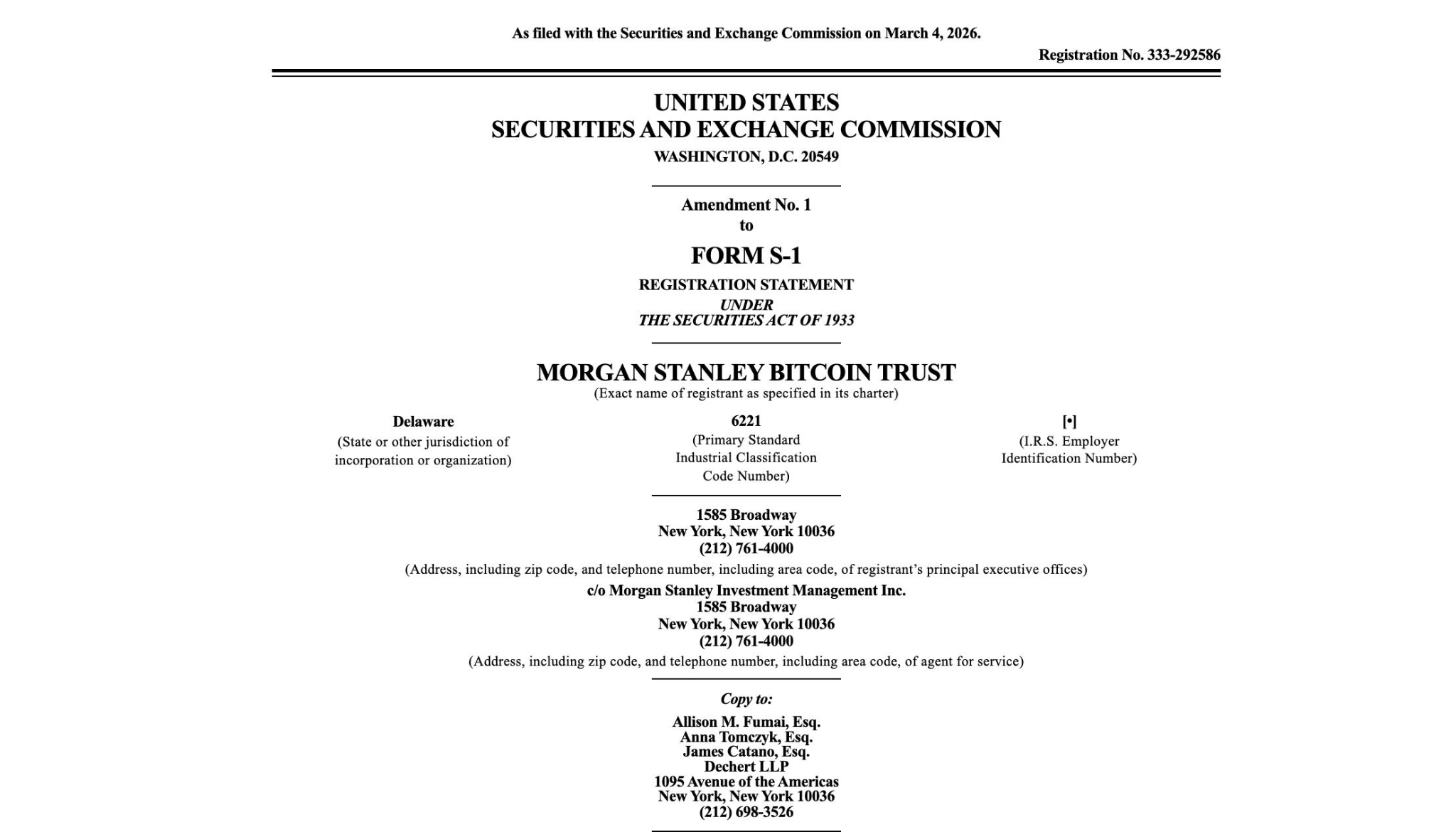
Caption: Morgan Stanley partners with Coinbase and BNY for Bitcoin ETF custody. Source: Cointelegraph
The FOMC Hangover — Rate Cut Hopes Meet Reality
Not everything in March was positive. On March 18, the Federal Reserve held its FOMC meeting — and delivered a textbook "sell-the-news" event. Bitcoin jumped to $74,000 before the meeting and dropped back to $70,500 after the announcement.
This kind of reaction had already played out in eight of the last nine Fed meetings — a reminder that crypto is still tightly linked to macro liquidity conditions. Each time the market expected aggressive dovish signals, the Fed delivered something more cautious. Each time, risk assets briefly pulled back.
Still, the underlying picture kept improving. The Crypto Fear & Greed Index recovered from "extreme fear" in early March toward "neutral" by late March. Total crypto market cap climbed 3% to $2.44 trillion. And the CMC20 index tracking the top cryptos gained 3.58%.
For Bitcoin to fully confirm a trend reversal, analysts were watching the $72,600–$75,000 range — key resistance that had rejected every major bounce since the February crash. As the month closed, BTC stabilized in the $69,000–$71,000 range, still clearly below that resistance but well above the February lows.
Beginner takeaway: 🎯 Recoveries in crypto are rarely clean. You get sharp bounces, sudden rejections, and consolidation phases that test everyone's patience. The traders who survive are the ones with a plan — not the ones reacting to every Fed meeting.
Closing Thoughts
March 2026 wasn't a full bull market — but it was the first real crack of light after two dark months. Institutions stopped selling and started buying. Wall Street heavyweights committed to crypto infrastructure. And on-chain data showed long-term holders absorbing every dip.
The recovery thesis is now alive. But this is a different kind of recovery compared to previous cycles — driven by ETF flows, corporate treasuries, and bank-grade custody, not retail hype. That means moves may be slower and more measured — but also more sustainable.
For beginners, March's message is simple: the worst moment to panic is often the best moment to be boring. Buy a little. Wait. Repeat. Don't try to catch every bounce — just stay consistent. That's how you build a position that actually matters when the real move comes. 🚀
This article does not contain investment advice or recommendations. Every investment and trading move involves risk, and readers should conduct their own research when making a decision.
Try this in the CryptoUnity app
Set up a weekly auto-purchase in about two minutes, and start with 0% trading fees for 30 days.
Download the appRead next

Market News
Bitcoin stalls below $65,000 while ETF money quietly returns — what actually moved this week
A $114 million hardware wallet hack, the best ETF inflow week since April, and a market that refuses to move in either direction. This week had three stories that matter to beginners — and one warning from EU regulators that you should read before anything else. We explain each one calmly, in plain language, and show what it means for you.

Education
Why do crypto prices move so much?
It's the question every beginner asks after their first week: why does the number keep moving? The answer isn't "because crypto is crazy" — it's four specific mechanics, and once you know them the movement stops feeling random. No jargon, no predictions, just how the machine actually works.

Education
How much money do you actually need to start with crypto?
"I don't have enough money" is the most common reason people put off starting. And it's almost always wrong. We explain why the entry barrier isn't what you think, why starting small is actually smarter than starting big, and how to work out the amount that lets you sleep at night. No jargon, no pressure.